
Radar Abitamo, 5 October 2026. Updated on 7 October.
On 29 September, Spain’s Council of Ministers approved two royal decree laws on housing. On 2 October, Congress repealed them. On 5 October, Pedro Sánchez called a general election for 29 November. And on 6 October, the government approved them again.
Four milestones in one week. And one question nobody has answered well: what happens to my lease?
What was approved on 29 September
There were two texts. The first, Royal Decree Law 26/2026, was published in the BOE (Spain’s official gazette) on 30 September. It bundled several measures: a suspension of evictions of vulnerable people with no alternative housing until 31 December 2030, a limit on speculative purchases by investment entities (only below 70% of market value, until the end of 2028), and tax benefits for renting.
It also hit tenants’ wallets directly. For leases whose anniversary fell while the decree was in force, rent could not rise if it already exceeded the cap set by the reference index system, and in every other case the increase could not go above 2%. A tenant up to date on payments could also request an extraordinary extension of up to two years for leases expiring before 2029.
The second, Royal Decree Law 27/2026, was published on 1 October and entered into force the next day. Its goal was stability for primary residence leases. Contracts would renew automatically for five year periods, or seven if the landlord is a legal entity. A landlord would have to give six months’ notice not to renew, against two months for the tenant, and would owe compensation of at least twelve months’ rent of a comparable home, with exceptions such as the landlord needing the home for personal or family use.
What happened next
Both decrees needed Congress to ratify them within 30 days. They didn’t have to wait that long. On 2 October the PP, Vox and Junts voted against and the chamber repealed them. According to OCU, the second decree was in force that same day, and the BOE published the repeal resolutions on the same date.
According to OCU, anything done while the decrees were in force, such as a rent update with an anniversary on 1 October or a court suspension already granted, stays valid. OCU recommends reviewing communications, registered letters, requests and court rulings together with their dates.
What changed since 6 October
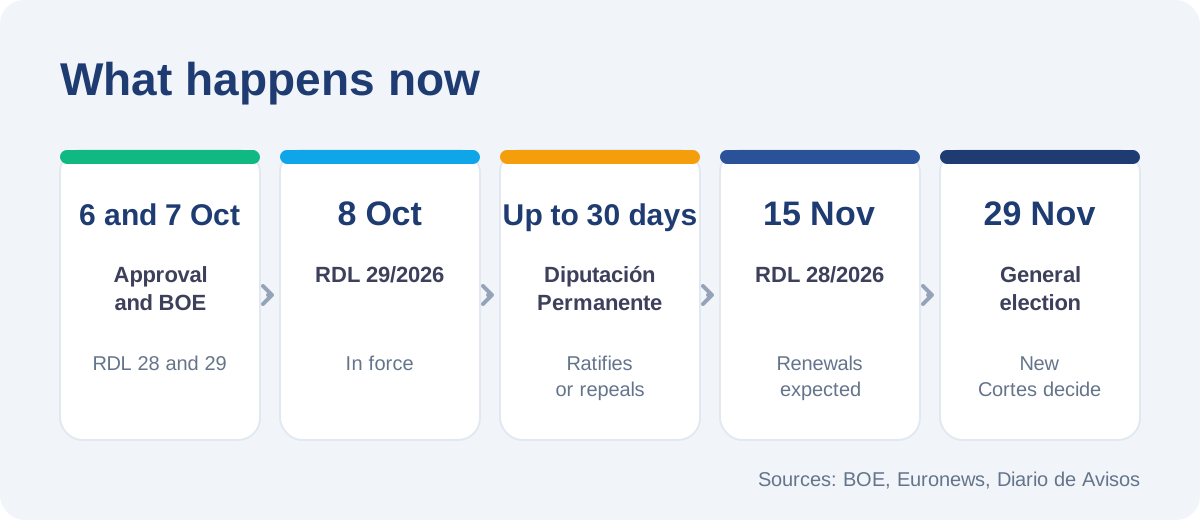
The government didn’t wait for the election. On 6 October it approved both decrees again, with changes that, according to the press, keep their essence, and the BOE published them on 7 October under new numbers.
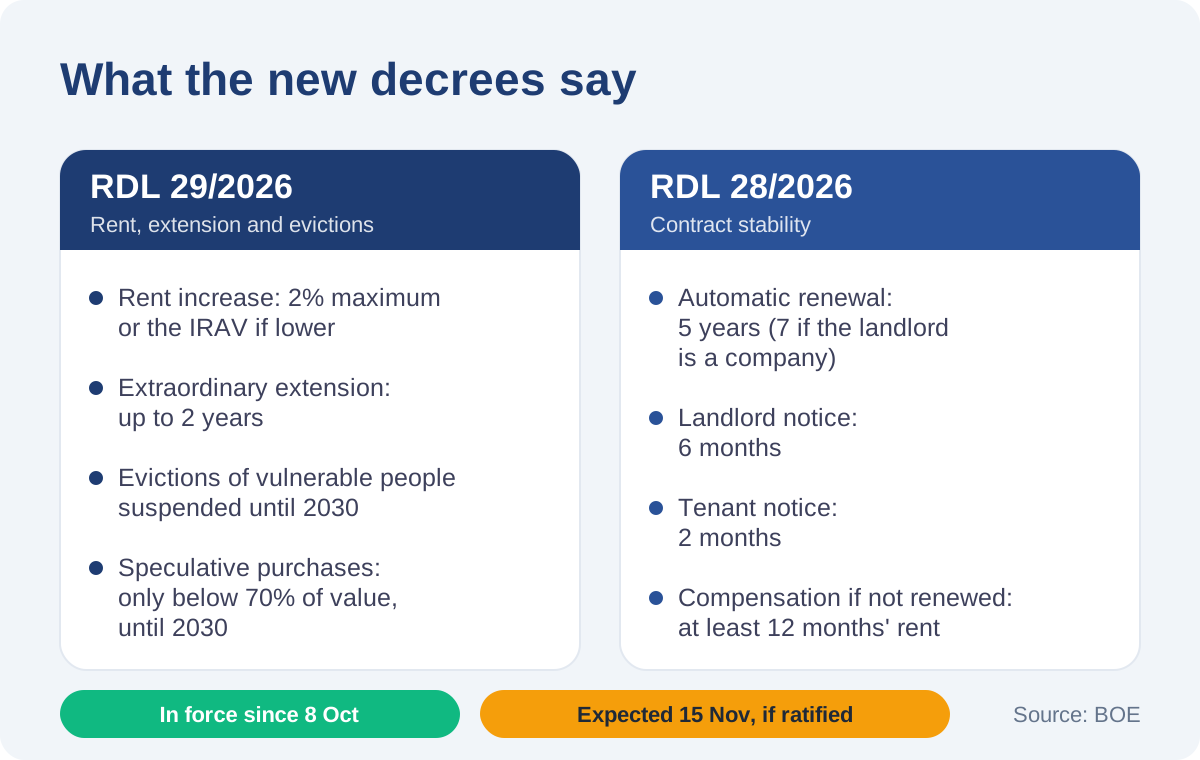
Royal Decree Law 29/2026 carries most of the package and has been in force since 8 October. If the parties don’t agree otherwise, the annual rent increase cannot exceed 2%, or the IRAV if lower, until 31 December 2027. If the rent already exceeds the maximum in a stressed market area, no increase applies. A tenant who is up to date on rent, and has been for the previous eight months, can request an extension of up to two years, ending before 31 December 2028. The suspension of evictions of vulnerable people runs to 2030, and the limit on speculative purchases, below 70% of market value, is extended to 2030 and now reaches large holders. It also adds a 10% income tax deduction for rent on a primary residence for lower incomes, and the Tu Casa loans, up to 50,000 euros at 0% for a first home purchase, with an initial fund of 10,000 million.
Royal Decree Law 28/2026 is the one on leases. It keeps the automatic renewals of five years, or seven if the landlord is a company, the six months’ notice for landlords against two for tenants, and the compensation of at least twelve months’ rent. According to the BOE it enters into force on 15 November 2026. The BOE text doesn’t tie that date to any vote. The government and the press, however, say it depends on the Diputación Permanente ratifying it, and we haven’t found a date for that vote. If it repeals the decree, it would stop applying. It covers leases that expire after it enters into force, including ones already signed.
The decree adds two more extraordinary extensions. One year for vulnerable tenants, and up to three years in tensioned market zones, mandatory for large holders. Both are requested by the tenant, and they are coordinated with the two year extension in Royal Decree Law 29/2026.
The market didn’t wait
Landlords had already reacted. The Observatorio del Alquiler, run by the Fundación Alquiler Seguro, detected 4,290 fewer homes than expected between 28 and 30 September, right as the decrees were announced. The Observatorio itself warns that not all of that drop can be pinned on regulation.
The problem is older. According to idealista/data, in 2025 there were 510,091 long-term rental listings in Spain, against 902,664 in 2018. That is about 393,000 fewer in seven years, counting only active listings on its platform.
When a landlord doesn’t know what rules their lease will live under in three months, signing gets pushed back. And when a tenant doesn’t know whether their extension exists, they can’t plan to move or to stay.
What comes next
The Diputación Permanente, a 69 member body that takes over Congress’s functions while parliament is dissolved, has up to 30 days to ratify or repeal the decrees, according to Euronews. Its arithmetic differs from the plenary’s, but we have seen that a decree can fall within days.
That means Royal Decree Law 29/2026 applies today, at risk of being repealed, and 28/2026 doesn’t apply yet. And after the 29 November election, a new majority could change direction again.
What to do in the meantime
If you’re a landlord, watch your lease’s anniversary and its expiry date. If it expires after 15 November, automatic renewal could apply to your lease. Since 8 October, rent increases are capped at 2%, or the IRAV if lower, while the decree stays in force. Keep dated records of every communication with your tenant and check when your lease expires.
If you’re a tenant, keep any communication received since 1 October. If your lease expires soon, check whether requesting the extraordinary extension suits you, and get advice before signing any change.
Either way, what is in your hands is having the contract and every communication properly documented. Rules can change with a vote. Signed paperwork can’t.
This article is general information, not legal advice. The decrees may be repealed or amended after the Diputación Permanente votes.